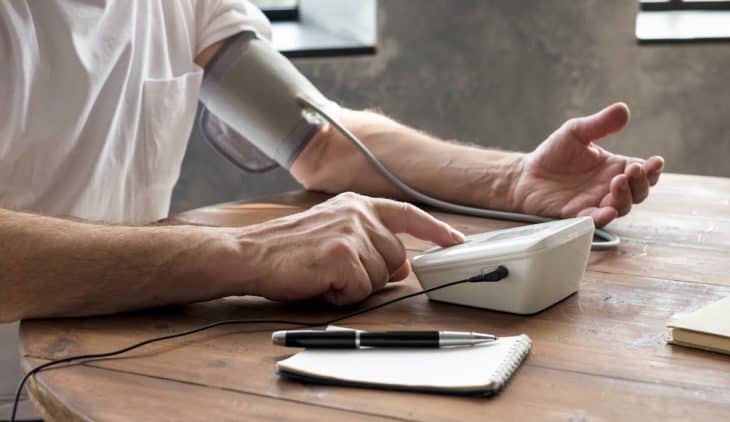
The heart is the hardest working muscle in the body. In fact, it pumps almost 2,500 gallons of blood per day around your body. Before you die, your heart will have beaten around three billion times.
You can take this pressure off of your heart. How? Well, by controlling your blood pressure. One way to control your blood pressure is with the best blood pressure monitor. Why should you buy the best blood pressure monitor? There are many reasons, so let us explain.
Blood Pressure Monitoring and Seniors
As you age, most of the muscles in your body become weaker and weaker each day. In fact, after middle age, you'll lose about three percent of your muscle mass each year.
Also, your arteries become stiffer and stiffer as you age as well. There is controversy whether this increases blood pressure or whether the increase in blood pressure increases the stiffness. However, in either case, it's another reason you should monitor your blood pressure as you age.
Accurately Monitoring Your Blood Pressure
You should monitor your blood pressure in two ways: at home and at the doctor's office. You should do both of these, not just one.
Studies have found that at-home blood pressure monitor readings can be inaccurate for around 5%-15% of people. So while it's important to monitor your blood pressure regularly at home, you also need to get your blood pressure tested at the doctor's office by a trained professional as well.
Types of Home Blood Pressure Monitors
Home monitors come in two main styles, and choosing the right one matters for accuracy and ease of use.
Upper Arm Monitors
Upper arm cuff monitors are the gold standard for home blood pressure measurement. The cuff wraps around your upper arm at heart level, and the device inflates it automatically. Most physicians recommend upper arm monitors because they deliver the most consistent, accurate readings. The large display on many models makes it easy to read the numbers at a glance — an important feature if your eyesight isn't what it used to be.
Wrist Monitors
Wrist monitors are smaller, lighter, and easier to put on with one hand. They are a reasonable option for people who find upper arm cuffs uncomfortable, or for those with very large or very small arms that don't fit standard cuffs. The trade-off is positioning: your wrist must be held at exactly heart level during the reading, or the numbers will be off. For this reason, the American Heart Association recommends upper arm monitors as the first choice.
Finding the Best Blood Pressure Monitor
In order to monitor your blood pressure you have to find a quality blood pressure monitor. Quality, in this case, means most accurate. If you do not have an accurate blood pressure monitor, your health may suffer. The readings will be up some days, down some others and it will be hard to know whether or not you are truly managing your blood pressure.
One of the main reasons to get a blood pressure monitor is to put you in control. If you do not know your blood pressure, how will you control it? And if the readings aren't accurate, how will you control it?
Why Should Seniors Monitor Blood Pressure?
Self-monitoring also has another huge benefit — early diagnosis. You might be wondering if you don't already suffer from high blood pressure, should you be monitoring your blood pressure? The answer is a definitive "yes."
You never know when your blood pressure could spike. High blood pressure can also be a tip off to other problems such as kidney problems or diabetes. By monitoring your blood pressure you can start to correct these problems early, before they get out of control.
And perhaps the main reason to get a blood pressure monitor is the fact that high blood pressure usually has no major symptoms. In fact, blood pressure problems, in some cases, can be completely silent. Sometimes the only way to tell if you have it is to measure it.
As Ben Franklin says, "Don't put off until tomorrow what you can do today." Start monitoring your blood pressure today.
Our Top Picks

Omron Platinum Blood Pressure Monitor
Hospital-grade accuracy with TruRead technology that automatically averages three readings. Bluetooth connectivity syncs with the Omron Connect app. Large, easy-to-read display with a comfortable D-ring cuff.
Pros
- Hospital-grade accuracy
- Bluetooth app connectivity
- TruRead averages 3 readings
Cons
- Premium price point

Omron 10 Series Wireless Upper Arm
Stores up to 200 readings for two users and features a backlit display. The ComFit cuff fits standard and large arms. One of the most popular home BP monitors for a reason.
Pros
- Hospital-grade accuracy
- Stores 200 readings with date/time
- Wide-range ComFit cuff

Withings BPM Connect
A sleek, WiFi-connected BP monitor that syncs readings directly to your smartphone. LED display shows results on the device, and data can be shared with your doctor via the Withings Health Mate app.
Pros
- Sleek design — looks like a consumer device
- WiFi sync to Apple Health & Withings app
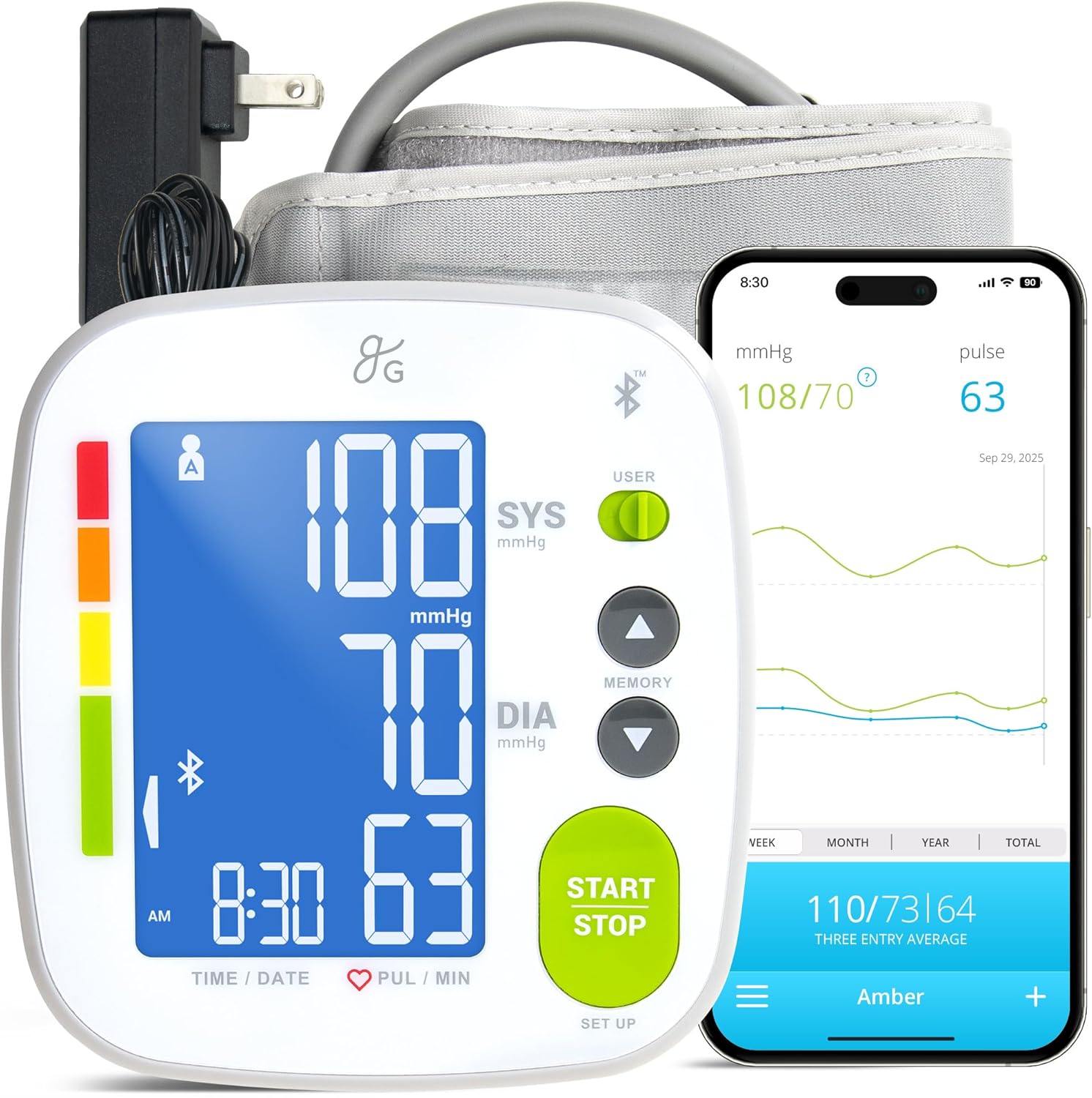
Greater Goods Bluetooth Blood Pressure Monitor
Affordable Bluetooth monitor with a large backlit display and Bluetooth connectivity. Designed in St. Louis, Missouri. Portion of profits goes to charity. Accuracy validated against clinical standards.

Omron 3 Series Upper Arm
The most affordable Omron monitor — no Bluetooth, no app, just reliable readings with a simple one-button operation. Displays systolic, diastolic, and pulse. Stores 14 readings.
Pros
- Most affordable Omron
- Simple one-button operation
Cons
- No Bluetooth or app

Beurer BM67 Upper Arm Blood Pressure Monitor
A German-engineered monitor with a large XL display, risk indicator, and arrhythmia detection. Stores 60 readings per user for two users. Fully automatic operation.

LifeSource UA-789AC Blood Pressure Monitor
A large-cuff BP monitor designed for bigger arms (up to 23.6 inches). Extra-large digits on the display make it easy to read. AC adapter included so you never need to worry about batteries.
Buying Guide
Final Editorial Verdict
Blood Pressure Monitors and Monitoring: Important Considerations
Measuring your blood pressure shouldn't be a stressful event. It should be part of your daily routine. Include it in your routine like you would brushing your teeth, washing your hands, eating, etc. This means that it should be something you do regularly without thinking too much about it.
If you are ever in doubt of the accuracy of your blood pressure monitor, be sure to test it out. Take it with you to your next doctor's office visit. Have the nurse or doctor take your blood pressure readings and then take your own blood pressure readings with the device.
Make sure the readings of both your doctor and the ones you took yourself match. If they do not, do several tests to ensure it is the device and not the way you are measuring. You can even ask the nurse or doctor to watch you. If continued readings do not match, return your blood pressure monitor and get a new one. Sometimes even a good brand can be faulty.
If your readings and the nurse's or doctor's do match, so much the better. You can now rest assured that you are getting accurate measurements.
How Do I Measure My Blood Pressure?
Properly measuring your blood pressure is very important when monitoring your blood pressure. Here are some important things to keep in mind when measuring your blood pressure in order to get accurate readings:
- Sit with both of your feet placed on the ground.
- Keep your arm at around heart level.
- Keep your arm supported by a table.
- Keep the cuff about a half inch above the bend in your elbow.
- Don't talk, drink coffee, or do any activity no matter how minor.
- Don't put the cuff over your clothing.
Note the categories for normal blood pressure, elevated blood pressure, high blood pressure (stage 1, stage 2) and the hypertensive crisis level. Be sure to contact a doctor if your reading enters into the danger zone, which is a blood pressure higher than 180/120 mm Hg.
How Can I Lower My Blood Pressure Naturally?
Dr. Laffin, MD discusses the fact that if you don't focus on lifestyle and try to rely solely on medication, the medication will not work as effectively. He says lowering your blood pressure is 70% lifestyle and only 30% is related to medication.
- Weight loss is the main factor in lowering your blood pressure.
- Use the DASH diet which consists of fruits, vegetables and low sodium/salt in your diet.
- Increase the amount of potassium in your diet by eating foods rich in potassium (this means spinach, bananas, apricots, avocados, potatoes, beans).
- Add cardiovascular exercises to your routine such as light jogging (150 minutes of aerobic activity a week).
- Lower your alcohol intake (no more than 1-2 drinks per day).